Wearing heels (and not die trying)
I have always thought heels were painful and I never fully understood how people could wear them for entire days. We are sold this idea of beauty or style equaling pain, but I have to tell you there is nothing as inelegant as seeing someone limping because of their heels. With this I would like to give you some tips and tricks that have helped me build a collection of shoes I can actually wear comfortably without wanting to cut off my feet by lunchtime.
Disclaimer: you have to get used to the heels, even the most comfortable ones will feel worse than sneakers and that is something you need to train
There are 3 things you should have in mind when choosing heels: height, stability and cushioning. I won’t talk about the style or shape of the shoes since I think that’s a personal matter, but let’s develop these 3 concepts:
-
Height:
I feel like this is the most obvious one. it goes without saying that the higher the heel the more uncomfortable they are, that’s why if you are not used to wearing heels or you know you are going to be on your feet a lot I would recommend some kitten heels.
There is a way of tricking the system: platforms, the higher the platform the taller you look without needing to put a lot of weight on the front of your foot
-
Stability
This is something we don’t often think about when shopping for shoes. I would say we can sum this up in 2 aspects: the strapping,the placement of the heel and the width
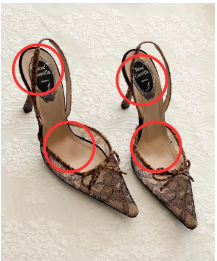
If a heel has a strap around your ankle(1) it will be more secure and therefore you will look less like a duck when walking, if you are looking for the more classic heel(2) that just adjusts to the foot I often have to size down from my usual shoe size just so I don’t feel like I’m wearing flip-flops.
This is why boots with a heel often feel more comfortable than your typical heeled sandals, with the boot your ankle is completely protected and in line with your foot so the leg also helps with the walking motions
The placement of the heel is something you will only be grateful for when you have been standing up for long. Look for shoes where the heel matches the center of your own , that way your weight is mainly on the ground and the front part of your foot doesn’t receive as much pressure. (3, centred & 4 on the back of the heel, all the pressure falls in in the front)
A wider heel is also far more stable than a stiletto, just because the weight can distribute in a wider surface
-
Cushioning
A lot of brands put most of their cushioning in places where it’s not really needed, the main parts you should are the ones I marked in the drawing, which is where most of the weight will go: the heel and the part where the foot folds to touch the ground. This is where your weight will go and the should be the 2 most comfortable points of the shoe
Usually it’s a bit difficult to find shoes that are perfect in every category, I would say as long as 2 of them are covered you should be fine. Depending on the activities you have planned for the day you can add extra cushioning if you think you will need it, height and stability are not really fixable once you have put them on but if you are wearing very high heels make sure your ankle is secured to minimise the risk of falling!